Memory Foam vs. Hybrid vs. Innerspring: Which Is Right?


Memory foam, hybrid, and innerspring mattresses each support your body in a different way, and the right choice depends on how you sleep, how hot you run at night, and how much bounce or firmness you like. Memory foam contours closely and isolates motion. Hybrids blend foam comfort layers with a coil base for support and airflow. Innerspring mattresses use coils for a bouncier, more traditional feel. Understanding these differences before you shop can save you from a purchase you regret.
Buying a mattress is not a small decision. You will spend roughly a third of your life on it, and the wrong choice can lead to back pain, overheating, or restless nights that follow you into your workday. In this guide, we break down exactly how each mattress type is built, who benefits most from each one, and what to check before you buy.
What Is a Memory Foam Mattress?
A memory foam mattress uses layers of viscoelastic foam that soften with body heat and pressure, then slowly spring back to shape once you get up. This creates a close, cradling contour around your shoulders, hips, and lower back. Memory foam is known for absorbing motion, so it works well for couples where one partner tosses and turns.
The foam itself was originally developed by NASA in the 1960s to cushion astronauts during liftoff. It later moved into medical settings for pressure sore prevention before becoming a mainstream mattress material in the 1990s. That pressure-relieving quality is still its biggest selling point today.
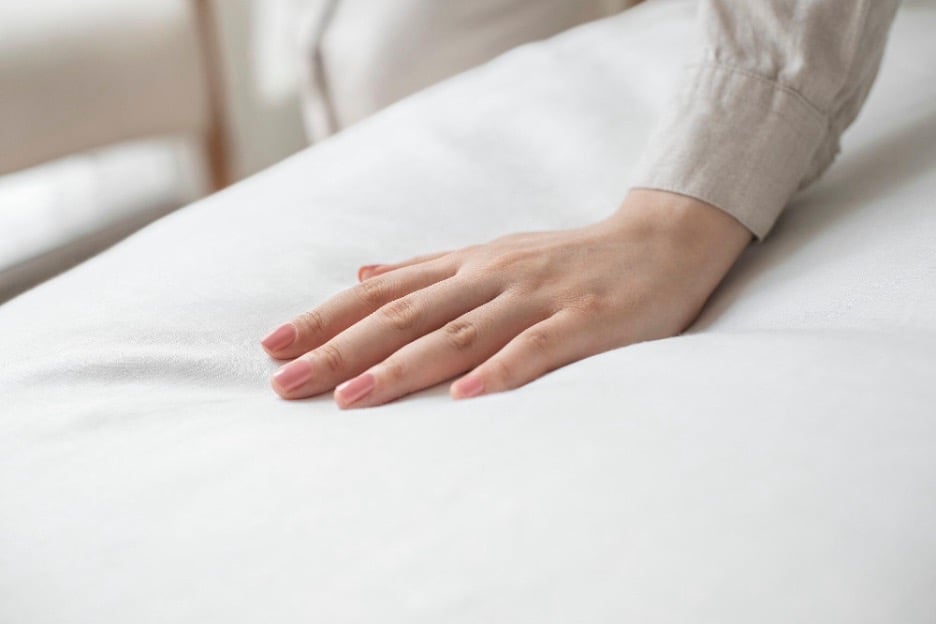
How memory foam feels: Memory foam has a slow, sinking response. When you press down and lift your hand, you will see a visible indentation that fades over a few seconds. This slow recovery is what gives memory foam its signature “hug.” Sleepers who like feeling cradled rather than resting on top of the mattress tend to prefer this feel.
Who memory foam works best for:
- Side sleepers who need extra cushioning at the shoulders and hips
- Couples with different sleep schedules, since motion transfer is minimal
- People with joint pain or arthritis who need pressure relief
- Anyone who shares a bed with a restless sleeper or a pet
The tradeoff: Traditional memory foam traps body heat because the dense material limits airflow. Newer foams use gel infusions, open-cell structures, or copper particles to pull heat away from the body, but even these cooling versions run warmer than coil-based mattresses. If you sleep hot, this is worth testing in person before you commit.
What Is a Hybrid Mattress?
A hybrid mattress combines a coil support base with foam or latex comfort layers on top. This construction is designed to deliver the pressure relief of foam with the airflow and responsiveness of springs. Hybrids have become one of the most popular mattress categories because they try to solve the biggest complaints about both foam and innerspring beds.
The coil layer, usually made of individually wrapped or “pocketed” coils, allows each coil to move independently. This means the mattress responds to your body’s specific pressure points rather than the whole surface moving together like it does in older spring designs. The open structure between coils also allows air to move freely, which keeps the mattress cooler than solid foam.
How hybrid feels: Hybrids sit somewhere between the sink of memory foam and the bounce of innerspring. You get some contouring from the top foam layers, but the coils underneath provide a responsive push-back that makes it easier to move and reposition during the night.
Who hybrid mattresses work best for:
- Combination sleepers who switch positions throughout the night
- People who want pressure relief without feeling like they are sinking in
- Couples with different firmness preferences, since many hybrids offer dual-firmness or zoned support
- Hot sleepers who still want some contouring comfort
The tradeoff: Hybrids tend to cost more than either memory foam or innerspring alone, since they combine two manufacturing processes. They can also be heavier, which matters if you plan to rotate or move the mattress yourself.
What Is an Innerspring Mattress?
An innerspring mattress relies on a network of steel coils for its primary support, topped with a thinner comfort layer of foam, fiber, or padding. This is the traditional mattress design most people grew up sleeping on, and it remains a solid, budget-friendly option.
Coil systems have evolved significantly. Older innerspring mattresses used a single interconnected coil system called Bonnell coils, where springs move as a connected unit. Newer versions use pocketed coils, similar to what you find in hybrids, which reduces motion transfer and improves durability.
How innerspring feels: Innerspring mattresses have a bouncier, more buoyant feel with less contouring than foam. You rest more “on” the mattress than “in” it. This makes it easier to move around, and many people find it feels cooler since air circulates through the coil structure.
Who innerspring mattresses work best for:
- Back and stomach sleepers who need firmer, more even support
- People who run hot and want maximum airflow
- Shoppers on a tighter budget, since innerspring is often the most affordable construction
- Anyone who prefers a traditional, bouncier feel over a contoured one
The tradeoff: Innerspring mattresses typically offer less pressure relief for side sleepers, and older coil designs can transfer motion easily, which disrupts sleep for couples. Comfort layers on innerspring beds also tend to compress faster than foam, shortening the mattress lifespan.
Comparing Motion Isolation, Support, and Temperature
Choosing between these three mattress types often comes down to three practical factors: how well the mattress blocks movement, how evenly it supports your spine, and how warm or cool it sleeps.
Memory foam wins on motion isolation because the dense material absorbs movement rather than transferring it across the surface. This makes it the strongest option for light sleepers who share a bed. Hybrids offer moderate motion isolation, since pocketed coils move independently but still transmit some vibration. Innerspring mattresses, especially older Bonnell coil designs, transfer the most motion, which can be noticeable if your partner shifts positions often.
For spinal support, hybrids tend to perform best across the widest range of body types because the coil base adjusts to weight distribution while the foam layers still cushion pressure points. Memory foam offers excellent support for lighter sleepers but can feel like it lacks pushback for heavier individuals, sometimes leading to a sense of sinking too deep. Innerspring provides firm, even support that works well for back and stomach sleepers but often underperforms for side sleepers who need more cushioning at the hips and shoulders.
Temperature is where the differences are most noticeable. Innerspring sleeps the coolest thanks to open airflow through the coils. Hybrid falls in the middle, since the coil base helps with airflow even though the foam top layer retains some heat. Memory foam sleeps the warmest, though cooling technologies have narrowed this gap significantly in recent years.
How Sleep Position Should Guide Your Decision
Your primary sleep position is one of the most reliable ways to narrow down mattress construction, since each position places pressure on different parts of the body.
Side sleepers need a mattress that cushions the shoulders and hips while keeping the spine aligned. Memory foam is often the top recommendation here because of its contouring ability, though a softer hybrid with generous foam comfort layers can work well too.
Back sleepers need support that keeps the lower back from sagging while still relieving pressure at the shoulder blades and heels. Medium-firm hybrids tend to be the safest choice, since they balance contouring with the support needed to prevent the hips from sinking too far.
Stomach sleepers need a firmer surface overall to prevent the midsection from sinking, which can strain the lower back. Innerspring or firm hybrid mattresses usually work best, since too much contouring in this position can cause misalignment.
Combination sleepers who move through multiple positions each night benefit most from hybrids, since the responsive coil base makes it easier to shift positions without feeling stuck.
Understanding Firmness Ratings Across Mattress Types
Firmness is measured on a scale from 1 to 10, with 1 being extremely soft and 10 being extremely firm. Most mattresses fall between 3 and 8, with medium-firm, around 5 to 6, being the most commonly recommended range for the average sleeper.
Firmness is not the same as support. A mattress can be soft on the surface while still providing strong support underneath, which is exactly how many hybrids are engineered. This distinction confuses a lot of shoppers who assume a firmer mattress is automatically a healthier one. In reality, a mattress that is too firm for your body type can create pressure points at the shoulders and hips, while a mattress that is too soft can let the hips sink out of alignment with the spine.
Weight plays a significant role in how firmness feels in practice. A side sleeper who weighs 130 pounds will sink into a medium mattress very differently than a side sleeper who weighs 220 pounds. Heavier individuals generally need firmer support layers or a thicker comfort layer to avoid bottoming out, while lighter individuals often find that very firm mattresses feel uncomfortable and unyielding.
What Nobody Mentions About Mattress Trials and Break-In Periods

Most mattresses, regardless of construction, require a break-in period before they reach their true feel. Memory foam can take up to 30 days to fully soften and contour as expected, since the foam needs to adjust to consistent body heat and weight. Hybrid mattresses usually settle faster, often within one to two weeks, because the coil base does not need the same adjustment period as solid foam. Innerspring mattresses feel close to their final form almost immediately, since coils do not require the same softening process.
This break-in period matters because a mattress that feels too firm on night one is not necessarily the wrong choice. Many sleep trial return decisions are made too early, before the materials have had a chance to adjust. If you are testing a new mattress, give it at least two full weeks before deciding it is not the right fit, unless you are experiencing pain that suggests a genuine mismatch rather than normal adjustment.
Common Mistakes to Avoid When Choosing a Mattress Type
Shoppers often make the same handful of mistakes when comparing memory foam, hybrid, and innerspring options.
One common mistake is testing a mattress for only a few minutes in a showroom. Lying on a mattress for five minutes in regular clothes does not replicate a full night of sleep, especially since materials like memory foam need body heat and time to respond accurately.
Another mistake is choosing based on price alone. A very low-cost innerspring mattress may use thin comfort layers and lower-gauge coils that wear out within a few years, while a mid-range hybrid might offer better long-term value even at a higher upfront cost.
Shoppers also frequently overlook edge support, meaning how well the mattress holds up near the perimeter. This matters if you sit on the edge of the bed to put on shoes, or if you tend to sleep near the edge. Innerspring and hybrid mattresses with reinforced coil borders typically offer stronger edge support than all-foam designs.
Finally, many people ignore the mattress foundation or base. Even the best mattress will underperform on a worn-out box spring or an incompatible bed frame. Memory foam and hybrid mattresses generally need a solid or slatted foundation with slats spaced closely enough to prevent sagging, so it is worth checking your existing frame before assuming the mattress itself is the problem.
Lifespan and Durability by Mattress Type
How long a mattress lasts depends heavily on its construction and the quality of materials used, not just the general category it falls into.
High-density memory foam mattresses typically last 8 to 10 years when properly cared for, since dense foam resists body impressions better than lower-density versions. Hybrid mattresses often fall in a similar range, though the specific lifespan depends on coil gauge and foam quality, since a hybrid is only as durable as its weakest component. Innerspring mattresses generally have the shortest lifespan, often 5 to 7 years, since thinner comfort layers on top of coils tend to compress and flatten faster than thicker foam or hybrid constructions.
Rotating your mattress every three to six months, regardless of type, helps distribute wear evenly and can extend its usable life. A mattress protector also plays a bigger role in longevity than most people realize, since it prevents moisture, oils, and debris from breaking down the comfort layers over time.
Frequently Asked Questions
Is memory foam or hybrid better for back pain?
Hybrid mattresses often work better for general back pain because they combine spinal support from the coil base with pressure relief from the foam layers. Memory foam can still be a strong choice for back pain if you are a side sleeper who needs extra cushioning at the hips and shoulders, so the right answer depends on your primary sleep position.
Do hybrid mattresses sleep cooler than memory foam?
Yes, hybrid mattresses generally sleep cooler than all-foam memory foam mattresses. The coil base allows air to circulate through the mattress, which helps pull heat away from the body, while dense memory foam tends to retain more heat throughout the night.
How firm should a mattress be for side sleepers?
Side sleepers typically do best with a medium to medium-soft mattress, generally in the 4 to 6 range on the firmness scale. This range allows enough cushioning at the shoulders and hips while still keeping the spine supported and aligned.
Are innerspring mattresses outdated?
Innerspring mattresses are not outdated, but modern coil technology has changed significantly from older designs. Pocketed coil systems now offer better motion isolation and support than the connected coil systems used decades ago, making innerspring a reasonable option for people who want a traditional, bouncier feel at a lower price point.
How long does it take to adjust to a new mattress?
Most people need two to four weeks to fully adjust to a new mattress, especially when switching between construction types like innerspring to memory foam. This adjustment period allows both your body and the mattress materials to settle into their normal feel.
Final Thoughts
Choosing between memory foam, hybrid, and innerspring comes down to matching the mattress construction to how you actually sleep. Memory foam offers the deepest pressure relief and motion isolation, making it a strong fit for side sleepers and couples who are easily disturbed by movement. Hybrid mattresses balance contouring with support and airflow, which works well for combination sleepers and back sleepers who want the best of both worlds. Innerspring mattresses remain a reliable, budget-friendly option for back and stomach sleepers who prioritize a firmer, cooler, more traditional feel.
Take the time to think honestly about your sleep position, your typical body temperature at night, and whether you share a bed with a partner who moves around. These three factors will point you toward the right construction faster than any single bestseller list or sales pitch. A mattress is a long-term investment in how well you rest, and in our experience, getting the construction type right from the start makes every other decision, from firmness to size, much easier to sort out.